From Concept to Presentation: Structuring Your Narrative with Keynote Design
Crafting a presentation is more than assembling slides; it is the construction of a narrative meant to inform, persuade, or inspire. The foundation of this narrative lies not only in the content but in its visual architecture. A coherent design template acts as the framework, ensuring each piece of information contributes to a unified story. For many professionals, the challenge begins with translating ideas into a visually engaging format that maintains consistency without demanding exhaustive design effort.
The Role of Pre-Designed Structures in Creative Work
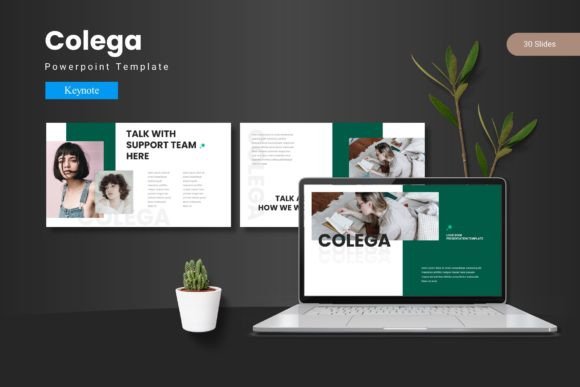
Consider the process of building a house. While the final appearance is unique, the construction relies on standardized, reliable components—a foundation, a frame, wiring—that ensure stability and safety. A keynote design template serves a similar purpose for digital presentations. It provides the structural components: layout grids, typographic hierarchies, color systems, and placeholder modules. This allows the creator to focus on the narrative and data, rather than agonizing over pixel alignment or font pairing. A template like Colega - Keynote Template offers this structured starting point.
Such resources are not about imposing uniformity, but about eliminating repetitive groundwork. When every slide requires reinventing its basic design principles, cognitive load increases and consistency often suffers. A premade set of master slides establishes visual rules, so that whether you are introducing a team, displaying a complex data chart, or concluding your talk, the audience perceives a single, professional voice. This is crucial for maintaining authority and keeping attention fixed on your message.
Characteristics of a Comprehensive Presentation Toolkit
A useful template extends beyond a handful of attractive slides. Its utility is measured by depth, flexibility, and editability. A robust collection might include 150 total slides, distributed across core presentation sections like introduction, analysis, case studies, and summary. This volume ensures you have a suitable layout for nearly any type of content you need to present, preventing the awkward scenario of having to force information into a mismatched visual format.
Variation is another key characteristic. Five distinct premade color schemes, for instance, allow the presentation to adapt to different contexts or brand identities without starting from scratch. A financial review might employ a more conservative, authoritative palette, while a creative pitch might use a vibrant, energetic one. The ability to switch seamlessly between these schemes while retaining all layout logic is a significant efficiency.
Furthermore, the true value lies in customization. The description includes elements like handcrafted infographics based on master slides, pixel-perfect illustrations, and all graphics being resizable and editable. This means the provided assets are not static images but intelligent components. You can adjust an icon's color to match your accent shade, scale a diagram without losing quality, or replace an image via a simple drag-and-drop into a picture placeholder. This level of control transforms a template from a rigid set of slides into a dynamic design system.
Real-World Applications Across Professions
The use cases for a well-structured keynote template are vast, touching nearly every field that requires clear communication.
- Business Professionals and Entrepreneurs: From investor pitches to quarterly reports, the need to present complex data with clarity and confidence is paramount. A template with dedicated portfolio slides, gallery layouts for product showcases, and sophisticated infographics for market analysis can elevate the substance of the content.
- Educators and Researchers: Academic presentations often involve dense information, lengthy processes, and comparative studies. Section break slides help segment lectures into digestible chapters, while editable illustrations allow for the customization of diagrams to explain specific scientific concepts or historical timelines.
- Creators and Hobbyists: Even non-professional presenters, such as community group leaders or workshop instructors, benefit from a polished visual structure. It removes the intimidation of design software, allowing them to share their passion or expertise through a presentation that looks intentionally crafted.
In each scenario, the underlying advantage is time. Time that would be spent on design minutiae is redirected to refining the argument, rehearsing the delivery, or deepening the research. The template becomes a collaborator, handling the visual grammar while the user supplies the vocabulary.
Balancing Flexibility with Cohesion
A common consideration when using any template is the risk of losing originality. However, a thoughtfully built system encourages customization within a harmonious framework. The mention of "layouts, fonts, and colors [customized] effortlessly to match your needs" speaks to this balance. You can change the primary font to your corporate typeface, modify the color scheme to align with your event's theme, and rearrange certain elements, all while the core spatial relationships and visual rhythm remain intact.
This ensures the final presentation feels uniquely yours, yet never disjointed or amateurish. The master slides govern the placement of titles, the padding around text, and the alignment of objects, so even as you personalize, the slides maintain a professional polish. This is particularly important for longer presentations, where visual consistency aids audience comprehension and retention across a thirty-slide narrative.
Observations on Effective Presentation Design
Beyond the features list, effective presentation design observes certain principles. Visual engagement is not merely about beauty; it's about reducing cognitive friction. A pixel-perfect illustration is not just a nice image; it's a clear, distortion-free visual cue that the audience can instantly understand. A resizable graphic means you can emphasize a key element by scaling it appropriately within its layout context.
The inclusion of a gallery slide is a practical solution for a common need: displaying multiple images, products, or team members in an orderly, comparable format. It solves a layout problem preemptively. Similarly, portfolio slides provide a structured way to present past work or case studies, often requiring a mix of imagery, short descriptions, and metrics.
These are not arbitrary features; they are responses to the recurring challenges presenters face. When a template anticipates these challenges and provides elegant, editable solutions, it moves from being a decorative background to being an active tool in the communication process.
Ultimately, the goal of any presentation is to leave a lasting mark. The content is the memory, but the design is the vehicle that delivers it. A cohesive, visually engaging experience, built on a flexible yet structured template, ensures that vehicle is reliable, adaptable, and capable of carrying your message with maximum impact. Whether you are a seasoned executive or a first-time presenter, leveraging such a system allows you to concentrate on what matters most: the story you are telling and the audience you are reaching.