Beyond Bland Slides: Evaluating the Presentation Template - Boredom for Professional Use
When tasked with creating a presentation, professionals often face a choice between starting from a blank, daunting canvas or using a pre-designed template. The latter can save immense time and provide a foundational design structure, but the market is saturated with options that range from overly generic to excessively niche. One template that stands out by deliberately addressing a specific aesthetic is the Presentation Template - Boredom. It’s a purpose-built design system, not merely a collection of slides, and its distinct theme prompts a deeper evaluation of its fit for various business and creative contexts.
Understanding the Core Concept: Aesthetic as a Function
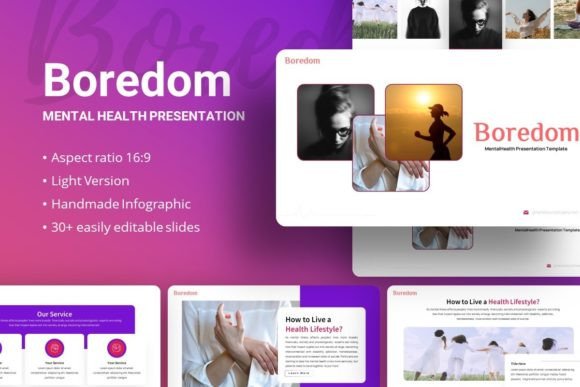
The Presentation Template - Boredom is more than its name. The "Boredom" here is a curated design concept, leveraging minimalist layouts, muted color palettes, and clean typography to convey sophistication, clarity, and focus. It contrasts sharply with templates that rely on vibrant colors, complex animations, or aggressive graphics. This approach makes it distinct. It’s built for scenarios where the message needs to stand alone, without competing with decorative elements. The template includes 35 master slides, handcrafted infographics, pixel-perfect illustrations, and editable vector graphics, all based on a cohesive master slide structure for consistent customization.
Comparing it to general corporate templates, the difference is philosophical. Many business templates aim for a "dynamic" or "energizing" feel. The Presentation Template - Boredom opts for calm authority. This isn’t a limitation but a deliberate design choice. Its strengths lie in situations where trust, data presentation, and straightforward communication are paramount. For a creative agency’s portfolio showing clean design work, a startup’s pitch deck focusing on a complex business model, or a corporate report detailing nuanced financials, a subdued background can make the content itself more arresting.
Practical Features and Customization Tradeoffs
The technical specifications of the Presentation Template - Boredom are practical. It’s delivered as a PowerPoint .PPTX file with documentation, using the open-source Mada and Manrope fonts, which support readability and a modern, sans-serif look. It includes drag-and-drop picture placeholder for Unsplash, Pixabay, and Pexels images (though demo images are not included). All graphical elements are resizable and editable without losing quality.
However, these features come with inherent tradeoffs common to specialized templates. The highly curated aesthetic, while easily customizable in color and content, may require more effort to fundamentally alter its mood. If your brand identity is inherently playful or requires loud, energetic visuals, adapting this template could feel like working against its core design, making the process less efficient than choosing a template with a closer starting vibe. The ease of customization is high for content, but moderate for a complete stylistic overhaul. This contrasts with more neutral, truly blank-canvas templates that offer total freedom but zero starting guidance.
Evaluating Fit: When This Template is the Right Choice
The decision to use the Presentation Template - Boredom hinges on aligning its design philosophy with your presentation’s goal and audience.
Best-Fit Scenarios and Use Cases
It excels in environments where clarity and credibility are the primary objectives. Consider these realistic examples:
- Company Profile for Investor Meetings: A clean, bored aesthetic can direct attention solely to financial metrics, growth charts, and team credentials, avoiding any visual distraction that might undermine seriousness.
- Creative Agency or Personal Portfolio: For designers, photographers, or architects, a minimalist template acts as a neutral gallery wall, allowing the showcased work to be the sole focal point without template "style" interfering with the portfolio's style.
- Complex Data or Technical Pitch Decks: Startups in fields like fintech, SaaS, or biotechnology often need to explain intricate systems. The template’s structured infographics and clear layouts help organize complex information hierarchically.
- Corporate Reports and Internal Presentations: When disseminating sensitive or detailed information internally, a professional, understated template fosters a tone of analysis and deliberation.
Potential Limitations and Alternative Paths
Recognizing when this template might not be the optimal choice is equally important for informed decision-making. Its limitations become apparent in contexts requiring high emotional engagement or brand-specific exuberance.
- Marketing Kickoffs or Brand Launches: Events designed to energize a team or announce a vibrant new product often benefit from more visually stimulating templates that match the campaign’s energy.
- Consumer-Focused Sales Pitches: If your direct audience expects flash and excitement, a strictly minimalist approach could be perceived as lacking passion, even if the content is strong.
- Educational or Workshop Material: For training sessions aiming to be interactive and engaging, a template with more built-in visual cues, icons, and varied color zones might better support learning comprehension.
In these cases, alternatives exist along a spectrum. You might consider a more neutral, versatile business template with optional energetic elements, or seek a template designed explicitly for your industry’s typical tone. The key is to match the template’s inherent emotional resonance with your presentation’s desired outcome.
Key Decision Factors for Professionals
Choosing a presentation template is rarely about features alone; it’s about strategic alignment. When evaluating the Presentation Template - Boredom against your needs, focus on these factors:
Audience Expectations and Industry Norms
Analyze what your specific audience expects to see. A venture capital investor may appreciate the bored, focused aesthetic, valuing it as a sign of confidence and substance. A consumer audience at a lifestyle product launch might find it too austere. Similarly, industry norms matter. Tech and design circles often embrace minimalism, while other sectors may have different visual traditions.
Brand Identity Cohesion
Does the template’s visual language complement or contradict your existing brand materials? If your website, logo, and marketing all use bold colors and rounded, friendly shapes, introducing a stark, minimalist presentation could create a dissonant experience. The template should feel like an extension of your brand’s visual world, not an outlier.
The Balance Between Speed and Authenticity
Templates promise speed. The Presentation Template - Boredom offers a fast start if its aesthetic aligns with your goal. If it doesn’t, the time spent trying to reshape its core look could negate the efficiency benefit. Sometimes, starting from a simpler base or even a blank slate, though initially slower, leads to a more authentic and fitting final product.
Content-Type Dominance
Finally, consider what dominates your slides. Is it text-heavy data, photographic work, or conceptual infographics? This template’s strength is in framing content elegantly, not overpowering it. If your presentation is primarily high-impact, emotional video clips or very few words per slide, a template with such a strong, quiet frame might not be necessary or could even feel redundant.
Ultimately, the Presentation Template - Boredom is a powerful tool for a specific set of professional communication challenges. It represents a choice for clarity over clutter, for substance over style, and for a particular kind of modern professionalism. Its value isn’t universal, but for those whose needs match its philosophy, it provides not just slides, but a coherent and credible visual strategy, allowing the presenter’s ideas to occupy the center stage, free from unnecessary distraction.